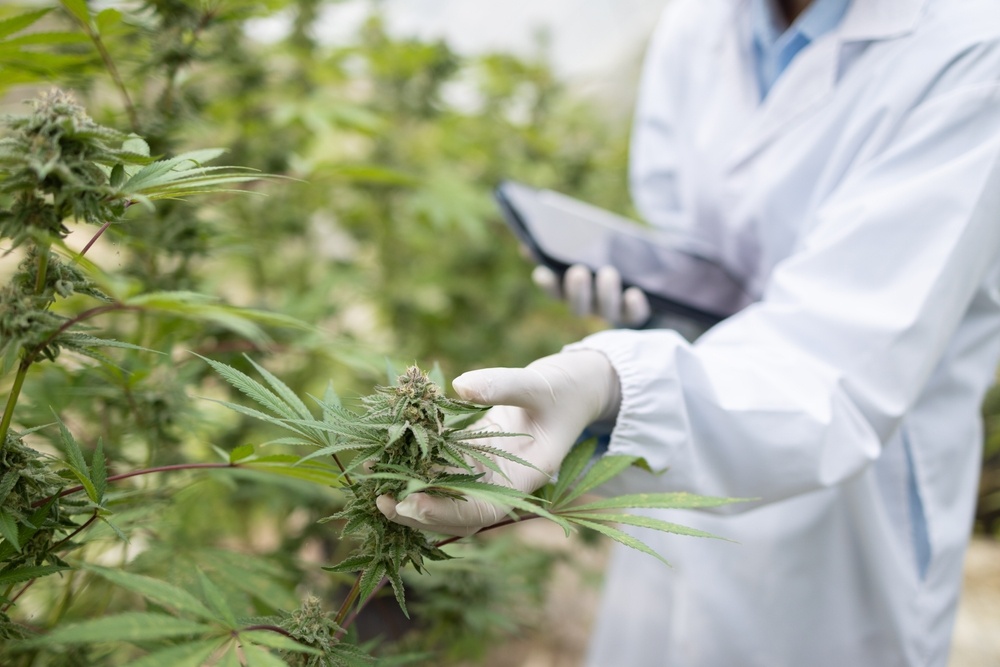
For commercial cannabis cultivators, increasing yield is no longer simply about producing more biomass. The most successful operators understand that true profitability comes from maximizing grams per square foot while maintaining the cannabinoid potency, terpene expression, and visual appeal that command premium pricing.
In today’s market, where wholesale flower prices remain under pressure in many states, cultivation teams must focus on increasing production efficiency without sacrificing quality. The challenge is finding the balance between volume and consistency.
Start with Proven Genetics
Genetics remain the single largest driver of cultivation performance. Even the most sophisticated cultivation facility cannot overcome poor genetic potential.
Many operators have learned this lesson the hard way. For example, a cultivation facility may grow a strain capable of producing exceptional terpene content and testing at 30%+ THC, but if it consistently yields only 25 grams per square foot, profitability suffers. Conversely, cultivars such as high-performing Gelato, Runtz, or GMO phenotypes have demonstrated the ability to produce both premium-quality flower and commercial-scale yields when properly managed. Leading cultivation companies routinely phenotype dozens or even hundreds of plants before selecting production mothers. Their focus is not solely on potency but also on internodal spacing, flower density, disease resistance, harvest consistency, and overall grams per watt.
Environmental Control Creates Yield
Many cultivation facilities unknowingly leave yield on the table because environmental conditions fluctuate throughout the grow cycle.
Consider a 20,000-square-foot indoor facility producing approximately 50 grams per square foot annually. Through tighter environmental controls—including maintaining vapor pressure deficit (VPD) targets, improving airflow management, and optimizing irrigation timing—it is not uncommon to increase production by 10-20% without adding a single additional flowering room.
Top cultivators manage environmental conditions through plant-driven metrics rather than relying solely on temperature and humidity setpoints. VPD management throughout vegetative and flowering stages improves transpiration rates, nutrient uptake, and photosynthetic efficiency.
Many commercial operators also supplement CO2 between 1,000 and 1,500 ppm during peak photosynthetic periods. When combined with appropriate lighting intensity and environmental controls, CO2 enrichment can significantly increase flower production and overall biomass accumulation.
Optimize Light Utilization, Not Just Light Intensity
The transition from HPS lighting to modern LEDs has created opportunities beyond energy savings.
A common mistake is simply increasing light intensity. Experienced growers focus instead on optimizing Daily Light Integral (DLI) and achieving uniform canopy coverage.
For example, a facility replacing 1,000-watt HPS fixtures with high-efficiency LEDs may see improved flower development in lower canopy zones due to better light distribution. This often results in higher percentages of top-grade flower and reduced popcorn bud production.
Uniformity is often more important than maximum PPFD readings. A consistent canopy receiving even light distribution, typically outperforms one with extreme hotspots and shaded areas.
Canopy Management Drives Production
Commercial cultivation is largely a game of canopy management.
Techniques such as topping, low-stress training, strategic defoliation, and trellising help create uniform flowering sites and maximize light interception.
One multi-state operator reported increasing harvest weights by nearly 15% after implementing standardized trellising protocols across all cultivation facilities. The improvement came not from adding more plants but from improving canopy uniformity and flower site development.
Every square foot of canopy should be contributing to production. Empty space, excessive vertical growth, and uneven canopies represent lost revenue opportunities.
Precision Irrigation and Nutrient Delivery
Overfeeding remains one of the most common mistakes in commercial cannabis cultivation.
Many experienced growers have shifted away from aggressive feeding schedules and instead rely on substrate monitoring, runoff analysis, and fertigation automation to maintain optimal root-zone conditions.
Facilities utilizing automated irrigation systems with real-time EC and moisture monitoring frequently report improved crop consistency and reduced nutrient waste. More importantly, plants experience less stress, resulting in improved terpene retention and cannabinoid development.
The goal is not maximum nutrient application but maximum nutrient efficiency.
Integrated Pest Management Protects Yield
A single outbreak of powdery mildew, russet mites, or botrytis can erase months of production gains.
Successful cultivation companies invest heavily in preventative Integrated Pest Management (IPM) programs. Biological controls, environmental monitoring, employee sanitation protocols, and routine scouting programs often prove far more effective than reactive treatments.
The most profitable crop is the one that reaches harvest without remediation.
Use Data to Drive Continuous Improvement
Leading cultivation operations increasingly resemble advanced manufacturing facilities. Every cultivation cycle generates data that can be used to improve future performance.
Metrics such as grams per square foot, grams per watt, cost per pound, harvest loss percentages, irrigation frequency, and environmental performance should be analyzed after every harvest.
For example, one commercial cultivator discovered that a specific flowering room consistently underperformed others. Data analysis revealed subtle airflow deficiencies that were reducing transpiration rates. Correcting the issue increased annual production by nearly 12% in that room alone.
The Bottom Line
The highest-performing cannabis cultivators understand that yield and quality are not opposing goals. Premium flower production and high yields are achieved through disciplined execution, genetic selection, environmental precision, and data-driven decision making.
As wholesale markets mature and margins continue to tighten, cultivation companies that can consistently produce more sellable flower per square foot—while maintaining potency, terpene profiles, and bag appeal—will be the operators best positioned for long-term success.
This version is geared toward cultivation directors, master growers, and commercial cultivation executives, emphasizing operational metrics, real-world cultivation practices, and examples that resonate with seasoned industry professionals.
About MaxQ Technologies
As the industry becomes increasingly more competitive, cannabis companies are looking for ways to increase efficiency and minimize costs while remaining compliant. MaxQ Cannabis helps cannabis manufacturers achieve these goals by providing the most modern, integrated, and scalable cannabis management solution.
MaxQ Cannabis pushes the boundaries of what is possible in managing the growth, processing, packaging, and distribution of cannabis products. Designed to meet the needs of even the most demanding cannabis operations, MaxQ Cannabis provides a fully integrated accounting, manufacturing, ERP, CRM, and distribution suite.